Multi-entity businesses
Several companies. One sign-in.
For groups that run more than one company: each entity keeps its own books, users, modules and settings, people switch between the ones they belong to, and the structure inside each entity decides who sees what.
How it works
Each entity on its own, all within reach
Separate organizations
Each company is its own organization, with its own data, users, roles, settings, currency and fiscal year.
One account, many organizations
People switch between the organizations they belong to from the top of the sidebar.
Different modules per entity
The trading company runs sales and inventory; the holding company may only need the ledger.
Preferences per organization
The same person can work in French in one company and English in another.
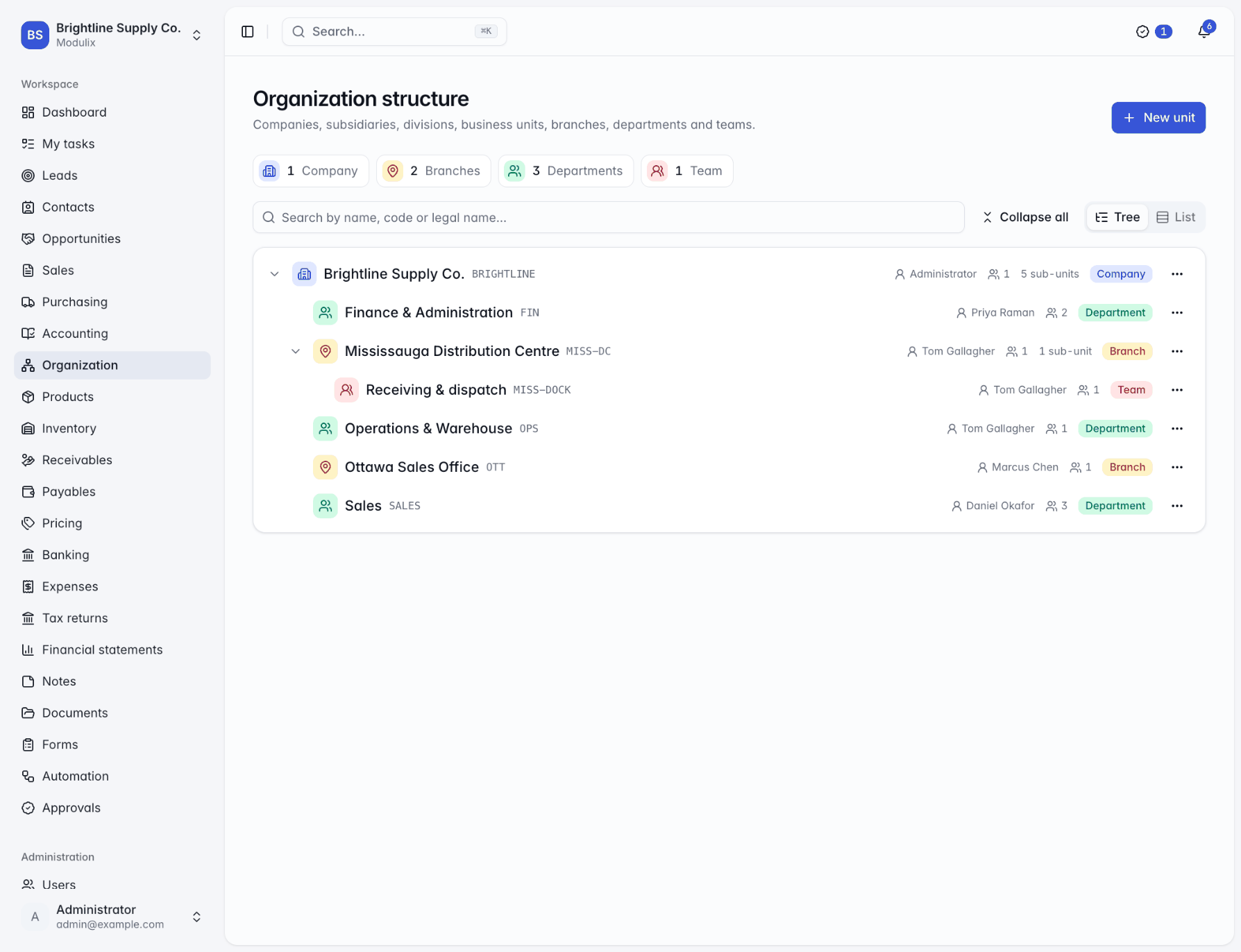
Structure inside each entity
Subsidiaries, divisions, branches, departments and teams, with legal details on companies and subsidiaries.
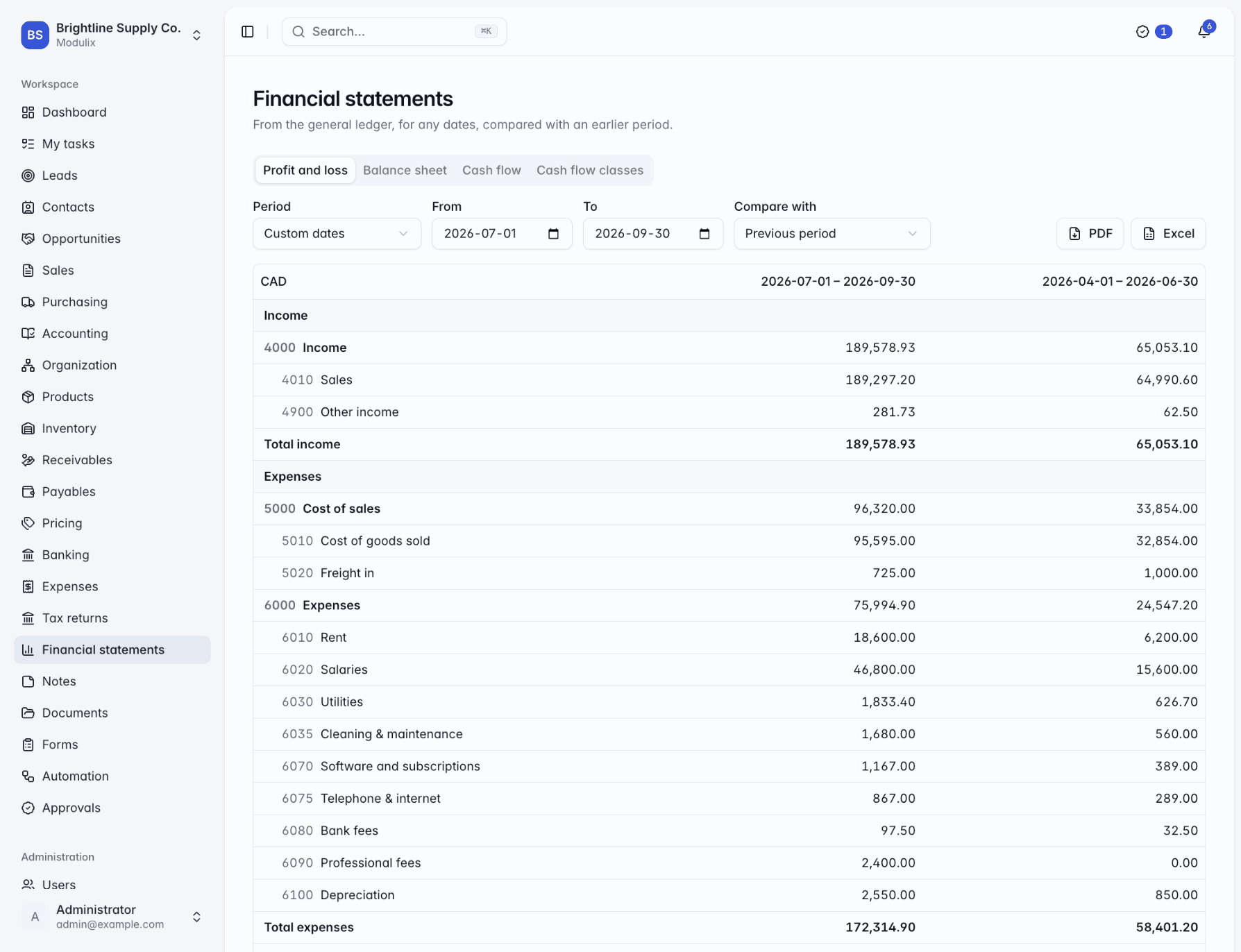
Statements per entity
Profit and loss, balance sheet and cash flow for each organization, in PDF or Excel.
Finance per entity
Clean books for every company
Every organization has its own chart of accounts, fiscal periods, bank accounts and tax returns, in its own currency. Financial statements compare any period with the previous one or the same period last year, and download as PDF or Excel for your group reporting.
Access
People see what is theirs
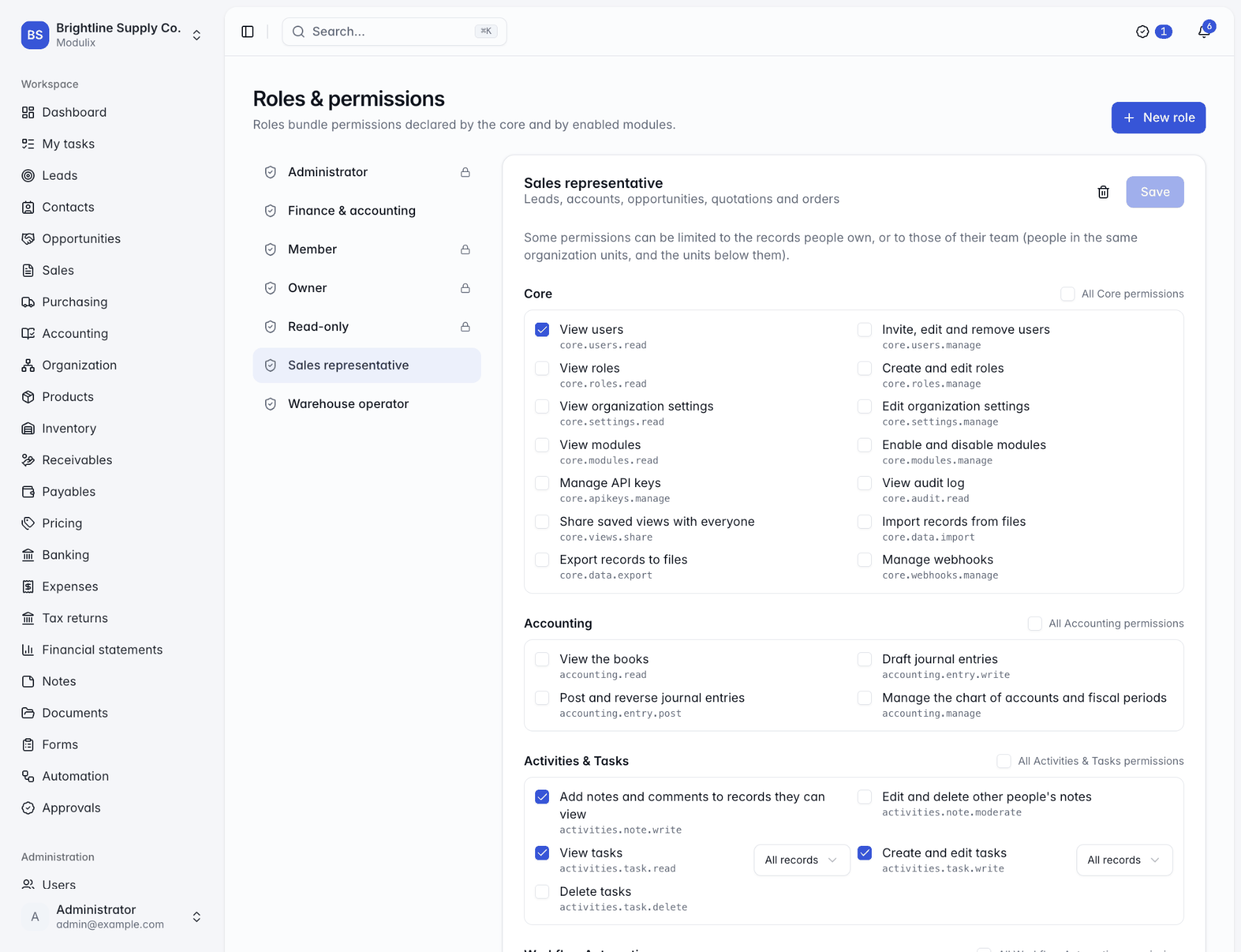
Roles are defined per organization, so someone can be an administrator in one company and read-only in another. Inside an organization, permissions can be limited to a person's own records or their team's, and teams come from the organization structure.
Questions
Running several entities
Not today. Each organization's statements come from its own ledger. Groups typically download each entity's statements to Excel and consolidate them there.
Yes. Modules are enabled per organization, so each company turns on only what it needs.
No. One account can belong to several organizations, with different roles in each. Invitations to a second organization are added to the existing account.
Yes. The organization structure describes companies, subsidiaries, branches, departments and teams inside one organization, sharing its data. Use separate organizations when entities must keep separate books and users.
See Modulix run your processes
Book a live walkthrough. Tell us how you quote, invoice, buy and close the month, and we will show you the modules you would use, how they connect and what moving over involves.